


Keeping Your Business Safe: A Guide to PAT Testing Risk Assessments
Ensuring the electrical safety of your UK business is not just best practice – it’s the law. Whilst portable appliance testing (PAT) itself is not a legal requirement, under the Electricity at Work Regulations 1989, employers must maintain electrical equipment to prevent…
Tell us what you need and we will come back to you the same working day.
 NAPIT ApprovedMember 66463
 Competent PersonRegistered, electrical
Ensuring the electrical safety of your UK business is not just best practice – it’s the law. Whilst portable appliance testing (PAT) itself is not a legal requirement, under the Electricity at Work Regulations 1989, employers must maintain electrical equipment to prevent danger. This is where PAT testing comes in.
But how do you determine what needs testing in your unique business environment and how often? This is where a proper risk assessment is key.
At DH Electrical Services, our expert electricians don’t just conduct professional PAT testing, we can also work with you to fully assess your electrical risks and create tailored PAT testing plans.
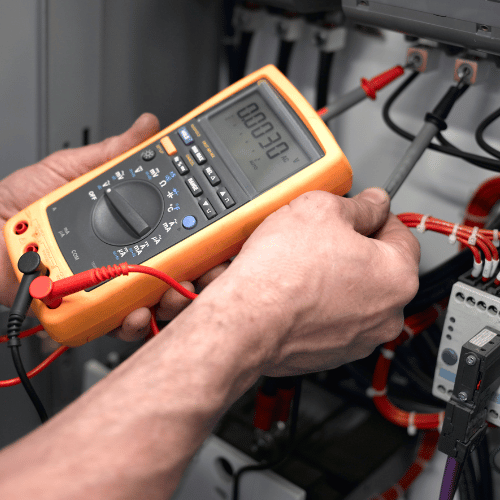
Why Bother With a PAT Testing Risk Assessment?
Conducting a thorough risk assessment before embarking on any PAT testing has four clear benefits:
1. It meets your legal responsibilities. The Health and Safety Executive (HSE) requires you to properly evaluate workplace risks including from electrical faults.
2. It keeps you compliant. By ensuring you PAT test where necessary, you comply with regulations like PUWER that govern electrical safety.
3. It saves you money. Identifying what needs testing and when prevents over-testing and wasted expenditure.
4. It protects your business. Faulty electronics are the cause of 25% of workplace fires. And while rare, electrocutions can and do occur.
Creating Your PAT Testing Risk Assessment
While there’s no single format, the HSE provides a straightforward risk assessment framework. Here’s how it can be applied to determine your PAT testing requirements:
Step 1: Identify the Electrical Hazards
Consider the types of appliances and equipment in use along with any environmental factors that could contribute to faults. Make a list.
Step 2: Analyse the Risks
For each item, analyse associated risks considering who uses it, how often and past inspection records. Calculate overall risk levels.
Step 3: Decide on Control Measures
Using your risk analysis, determine appropriate control measures such as user checks, training or PAT testing frequencies for each appliance or area.
Step 4: Record Your Plan
Document your PAT testing plan including appliances to be tested, intervals and person responsible. Review it annually.
Using Your Findings to Implement PAT Testing
Refer to HSE guidelines on suggested initial PAT testing intervals for low through high risk appliances. For example, hand-held construction equipment should be tested every 1-3 months.
Balance testing requirements with practical factors like appliance lifespan. There’s no value in 6-monthly tests for a microwave replaced every 5 years for instance.
Get Expert Help with Your PAT Testing Risk Assessment
While DIY assessments are possible, at DH Electrical Services, we recommend relying on expert assistance. Our fully qualified electricians can conduct on-site visits to identify all electrical risks, before providing professional advice on the most suitable, cost effective PAT testing plan for your business.
Our electricians in Liverpool can also professionally handle all your actual PAT testing, labelling appliances after inspection and issuing detailed records.
What this guide is based on
The standards, rules and job records behind the figures above.
- The IET Code of Practice for In-service Inspection and Testing of Electrical Equipment. What actually has to be checked on an appliance, and how often, rather than a date plucked out of the air.
- NAPIT scheme rules. What an approved contractor has to hold, record and report, including the certification we issue after every job.
- Our own job records across Liverpool and Merseyside. The figures above come from work we have actually priced and carried out, not from a national average.
Checked on 1 August 2024 by Dave Harvey, NAPIT approved contractor, member 66463. Rules change, so if you are reading this a long way after that date, give us a ring and we will tell you where it stands.
Related reading

Is PAT Testing a Legal Requirement for Landlords?
This one causes more confusion than almost anything else in landlord compliance, and the reason is that the honest answer is not…
Landlords
EICR vs PAT Testing: What’s the Difference?
Two acronyms, endless confusion. If you own a rental property or run a business, you've probably been told you need both an…
PAT Testing
How Often Do Different Types of Equipment Need PAT Testing
Setting the correct schedule for Portable Appliance Testing (PAT) across your business equipment can feel like solving a complex puzzle. With various…
The work behind it
PAT Testing
Appliance testing for offices, shops, HMOs and holiday lets, labelled, logged and priced per item.
Electrical Inspection & Testing
Full Electrical Installation Condition Reports for landlords, homeowners and businesses, with the certificate issued within 24 hours and remedials priced up front.
Landlord Electricians
EICRs, fire alarm testing and emergency lighting for rented property across Liverpool, booked around your tenants and certified the same week.