

How Often Should You Test Fire Alarms in the UK — Compliance, Frequency & Best Practices
A fire alarm sitting silently on the ceiling does nothing if the batteries have failed or the sensors have become clogged with dust over time. Regular testing ensures your system will perform when it matters most. For property owners, landlords, and business…
Tell us what you need and we will come back to you the same working day.
 NAPIT ApprovedMember 66463
 Competent PersonRegistered, electrical
A fire alarm sitting silently on the ceiling does nothing if the batteries have failed or the sensors have become clogged with dust over time. Regular testing ensures your system will perform when it matters most.
For property owners, landlords, and business managers across the UK, knowing the correct fire alarm testing frequency is essential. Get it wrong, and you risk failed audits, insurance complications, and—worst of all—putting lives at risk.
UK Fire Alarm Testing Requirements at a Glance
The Regulatory Reform (Fire Safety) Order 2005 places legal responsibility for fire safety squarely on the shoulders of the “Responsible Person.” This typically means the building owner, employer, or managing agent. The law requires fire warning systems to be maintained in working order at “suitable intervals.”
However, “suitable intervals” is not a fixed legal timetable. What counts as suitable depends on your specific risk assessment, building use, and the type of system installed. A small office with a simple alarm-only system will have different requirements than a large warehouse with an addressable network spanning multiple zones.
BS 5839-1 provides the industry-accepted guidance for fire alarm testing in non-domestic buildings. Fire services, insurers, and fire risk assessors treat this British Standard as the benchmark for compliance. It sets out recommended intervals for testing and maintenance, though it offers guidance rather than strict legal mandates.
For most non-domestic premises, the widely accepted practice includes weekly in-house tests conducted by the Responsible Person or staff. Professional inspections by a competent engineer are typically recommended at least every six months, with many larger or higher-risk buildings requiring quarterly visits. Annual servicing should cover every device in the system.
The exact schedule for your building depends on several factors. System complexity plays a significant role—a basic conventional system differs greatly from a sophisticated voice alarm installation. Building use matters too. Care homes, HMOs with multiple tenants, and premises with sleeping accommodation generally require more frequent attention than standard office buildings.
Weekly Fire Alarm Testing Explained
Most non-domestic buildings benefit from weekly fire alarm tests. This applies to offices, shops, warehouses, HMOs, and commercial premises across the board. The test confirms that the system can be triggered and that the alarm sounds audibly throughout the building.
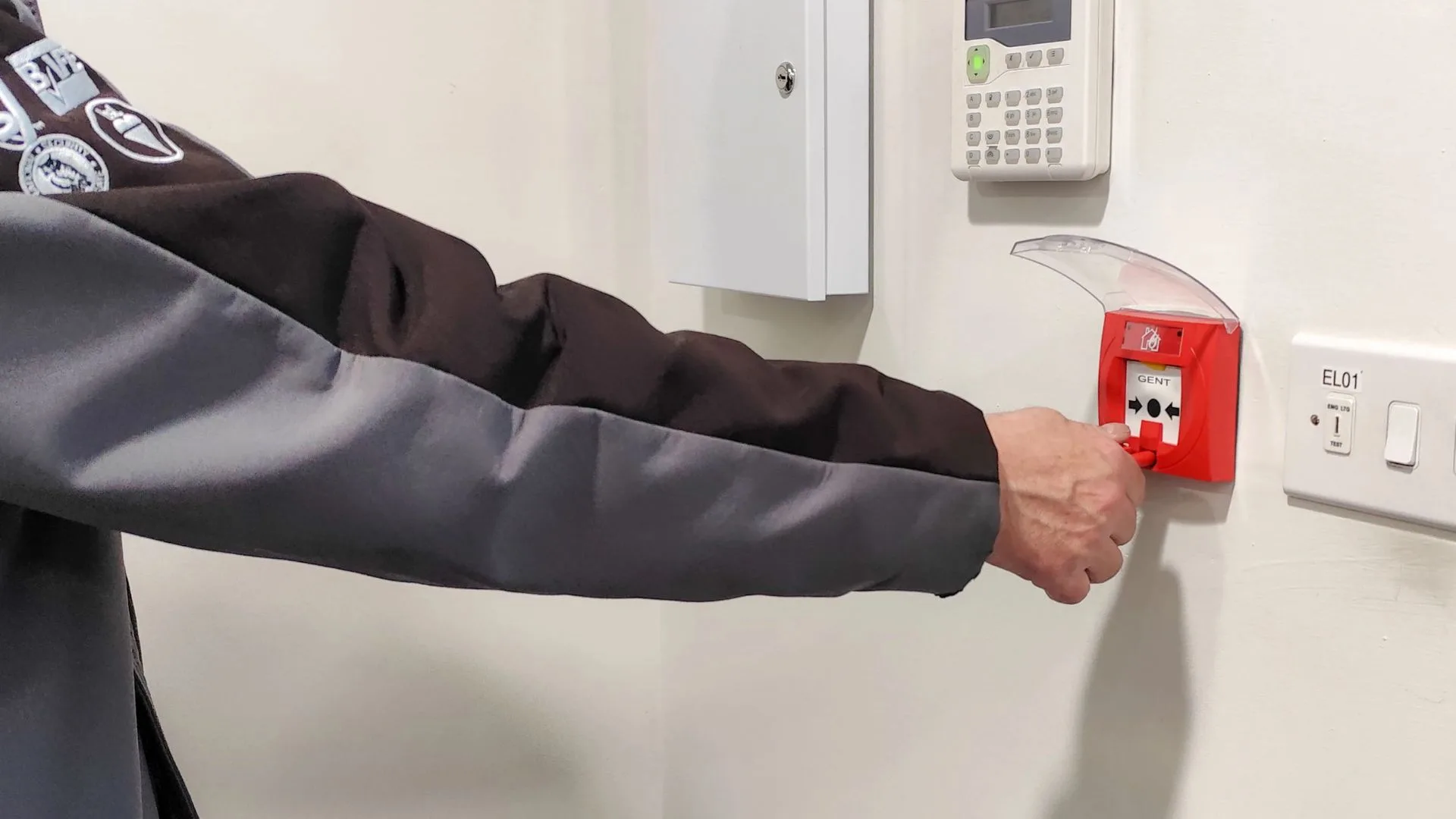
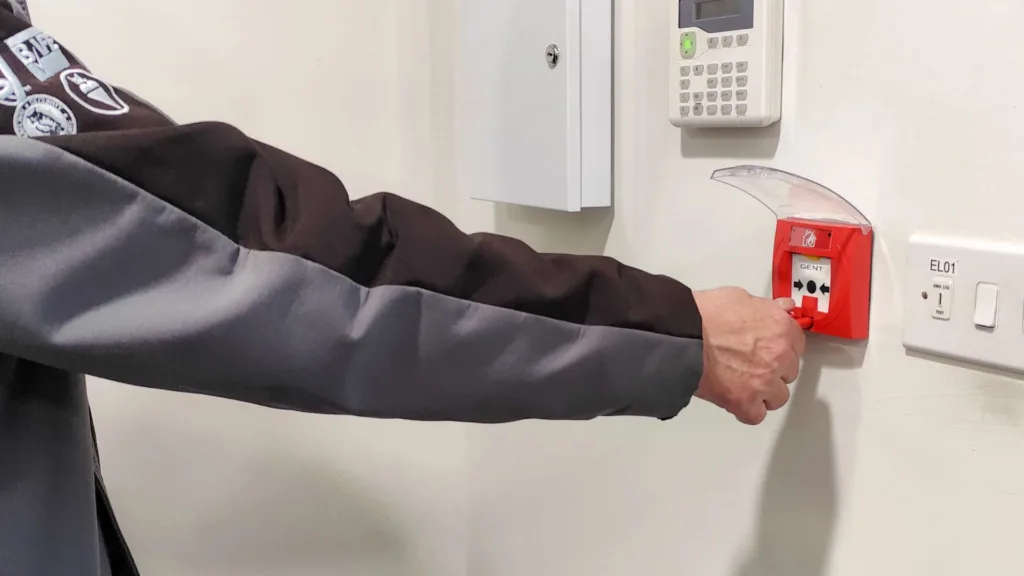
Each week, a different manual call point should be activated. Rotating through call points ensures that every device gets tested over time. The control panel should register the correct zone when the call point is triggered. Any faults need logging and addressing promptly.
Weekly tests are not full system inspections. They simply verify that basic activation and alert functions work correctly. Think of them as a quick health check rather than a thorough examination.
Recording these tests properly matters enormously. Every weekly test should be documented in the fire alarm logbook with the date, which call point was tested, confirmation that sounders activated, and the signature of the person conducting the test. Insurers and fire risk assessors will ask to see this documentation during inspections.
Professional Inspections and Servicing
While weekly tests can be handled in-house, professional inspections require a competent engineer. These visits go far deeper than pressing a call point.
During professional servicing, engineers check the control panel condition, battery health, power supplies, and fault circuits. A sample of detectors and call points get tested. Any previous faults should be confirmed as resolved. False alarm trends need reviewing to identify potential issues.
The recommended frequency for professional inspections varies. Many fire safety providers and industry bodies suggest inspections at least every six months as a baseline for most commercial systems. Higher-risk premises, larger installations, or more complex systems often warrant quarterly visits instead.
Annual servicing typically involves testing every detector, call point, sounder, and interface within the system. Backup power sources get tested under load. Engineers assess whether any structural changes to the building have affected sounder coverage or detector positioning.
Who Bears Responsibility?
The Responsible Person carries legal accountability for ensuring testing happens appropriately. This might be a landlord, building owner, employer, or appointed managing agent. Delegating tasks to staff or contractors does not remove this responsibility.
For landlords in the UK, fire alarm testing compliance is particularly important. Licensing conditions often require evidence of regular testing, and local authority inspections will check logbook records. Requirements can vary between councils, so checking with your local authority is always worthwhile.
Please note: Testing frequencies outlined in this article reflect widely accepted industry practice based on BS 5839-1 guidance. Specific requirements for your premises depend on your fire risk assessment, system type, and building use. Always consult a competent fire safety professional to determine the appropriate schedule for your situation.
What this guide is based on
The standards, rules and job records behind the figures above.
- BS 5839-1 and BS 5839-6. The British Standards that set the grade and category of system a building needs, and how often it has to be serviced and tested.
- The Regulatory Reform (Fire Safety) Order 2005. The duty on the responsible person to keep the alarm maintained and the records available for a fire officer to see.
- HMO licence conditions across Liverpool and the surrounding councils. What the licensing team asks for at inspection, which is usually the logbook and the last certificate.
- Our own job records across Liverpool and Merseyside. The figures above come from work we have actually priced and carried out, not from a national average.
Checked on 8 December 2025 by Dave Harvey, NAPIT approved contractor, member 66463. Rules change, so if you are reading this a long way after that date, give us a ring and we will tell you where it stands.
Related reading

Smoke and Carbon Monoxide Alarm Rules Every Landlord Should Know
The alarms on the ceiling can feel like a small detail next to everything else you sort as a landlord. They are…
Fire Alarm Testing
What Is Included in a Fire Alarm Test? A Complete Guide for UK Commercial Properties & HMO Landlords
Managing fire safety in commercial buildings and HMOs requires more than good intentions. It demands proper testing procedures that meet British Standards.…
Fire Alarm Testing
UK Fire Alarm Testing Regulations Explained: BS 5839, Legal Duties and Who’s Responsible
Fire alarm testing sits at the heart of building safety across the UK. Whether you manage an HMO, run a commercial premises,…
The work behind it
Fire Alarm Testing
Six monthly and annual servicing for commercial premises and HMOs, with the logbook filled in and the certificate issued on the day.
Emergency Light Testing
Monthly function checks and the annual three hour duration test, recorded properly so an inspector can see the system has been maintained.
HMO Electricians
The full set of certificates a licensed HMO needs, from the EICR to the alarm and emergency lighting records the council asks to see.
