


Fire alarm testing sits at the heart of building safety across the UK. Whether you manage an HMO, run a commercial premises, or oversee a block of flats anywhere in the UK, you need to know exactly what the law expects from you.
This guide breaks down the key regulations, explains who carries legal responsibility, and clarifies the testing frequencies your property requires.
The Legal Framework for Fire Alarm Testing in the UK
Fire safety legislation differs slightly depending on where your property sits within the UK. In England and Wales, the Regulatory Reform (Fire Safety) Order 2005 sets out the primary requirements. Article 17 of this Order specifically addresses the maintenance and testing of fire detection systems.
The Fire Safety (England) Regulations 2022 brought additional duties following recommendations from the Grenfell Tower Inquiry. These regulations commenced on 23 January 2023 and apply to all buildings containing two or more domestic premises. They work alongside the 2005 Order rather than replacing it.
Scotland operates under Part 3 of The Fire (Scotland) Act 2005, while Northern Ireland follows The Fire Safety Regulations (Northern Ireland) 2010. Each framework shares common goals but contains distinct requirements that property managers must follow.
Who Qualifies as the Responsible Person?
The term “Responsible Person” has a specific legal definition under the Fire Safety Order. You cannot simply appoint someone to this role, nor can you delegate the legal responsibility to contractors or staff members. The law determines who holds this position based on control of the premises.
For blocks of flats, the Responsible Person typically falls to the freeholder, managing agent, or residents’ management company. In workplaces, employers carry this duty for any areas where their staff work. Some buildings have multiple Responsible Persons where different parties control different sections.
Property owners and landlords often assume they can pass responsibility to a letting agent or maintenance company. This is not the case. While you can hire professionals to carry out testing and maintenance, the legal obligation remains with you as the Responsible Person.
BS 5839 Standards: Commercial vs Domestic Systems
British Standard 5839 provides the technical framework for fire detection and alarm systems. Two parts of this standard apply most frequently.
BS 5839-1 covers fire detection and alarm systems in non-domestic premises. This standard applies to offices, shops, warehouses, and other commercial buildings across the North West and beyond. It sets out system categories, installation requirements, and maintenance schedules that commercial property owners must follow.
BS 5839-6 addresses domestic premises, including individual dwellings and HMOs. This standard has particular relevance for landlords in the UK who manage rental properties. The requirements differ from commercial settings, with specific grades and categories based on property type and occupancy.
Fire Alarm Testing Frequencies Under UK Law
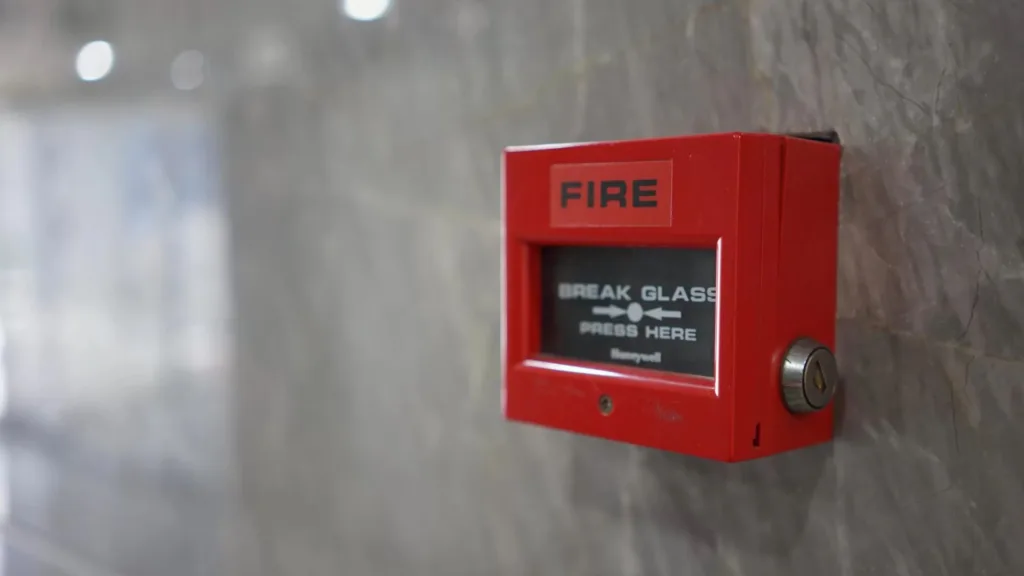
Testing requirements vary based on property type, but certain minimums apply across the board. Weekly testing of your fire alarm system is a legal requirement for most premises. This involves activating a manual call point to confirm the system responds correctly and that all sounders operate as expected.
You should rotate which call point you test each week, working through all devices over time. This approach ensures every component receives regular checks rather than testing the same point repeatedly.
Monthly visual inspections add another layer of verification. Check that control panels display normal operation, call points remain unobstructed, and no visible damage affects any system components. For high-rise residential buildings, the 2022 Regulations require monthly checks of fire detection systems alongside other safety equipment.
Professional inspections must take place at minimum every six months. A qualified engineer will examine the entire system, test each device, and provide certification confirming the installation meets required standards. Many properties benefit from quarterly visits, particularly those with higher risk profiles or complex systems.
Annual servicing provides the most thorough examination. Engineers will clean detectors, replace batteries where needed, and verify all connections and wiring remain sound. This annual check forms part of your ongoing compliance evidence.
Recording Your Fire Alarm Tests
Every test you conduct must go into your fire log book. Record the date, time, which devices you tested, and the outcome. Note any faults discovered and actions taken to resolve them.
These records serve multiple purposes. Fire and rescue services may request them during inspections. Insurance companies often require evidence of regular testing when processing claims. Most importantly, proper documentation protects you by demonstrating ongoing compliance with your legal duties.
For properties in Liverpool, Cheshire and across the North West requiring fire alarm testing, our qualified team provides 6 and 12-month testing services for HMOs, commercial premises, and any building where regular testing is mandatory. Contact DH Electrical Services on 07936 250380 or email [email protected] to arrange your testing schedule.