


EIC, EICR or Minor Works, Which Electrical Certificate Do You Need?
Three documents, similar names, and they get mixed up constantly. The short version is that an EIC and a Minor Works Certificate both certify work somebody has just carried out, while an EICR reports on the condition of an installation that already…
Tell us what you need and we will come back to you the same working day.
 NAPIT ApprovedMember 66463
 Competent PersonRegistered, electrical
Quick answer
An EIC certifies new work. A Minor Works Certificate covers a small change to a circuit that already exists. An EICR is not a certificate for work at all, it is a report on the condition of what is already there.
Three documents, similar names, and they get mixed up constantly. The short version is that an EIC and a Minor Works Certificate both certify work somebody has just carried out, while an EICR reports on the condition of an installation that already exists.
Getting the wrong one is not a filing error either. A buyer’s solicitor asking for the certificate for a new consumer unit will not accept a condition report, and a council asking for a condition report will not accept the certificate for the board.
Which one for which job
| The job | Certificate | Why |
|---|---|---|
| Full rewire | EIC | New installation |
| New consumer unit or board | EIC | New distribution equipment, affects every circuit |
| New circuit, such as a shower or a cooker | EIC | A circuit that did not exist before |
| Extension or outbuilding supply | EIC | New circuits and new installation |
| Extra socket on an existing ring | Minor Works | Alteration, no new circuit |
| Moving a light switch | Minor Works | Alteration, no new circuit |
| Replacing a damaged socket like for like | Neither, it is a repair | No alteration to the circuit |
| Five yearly landlord inspection | EICR | Assessing existing condition |
| Buying or selling a property | EICR | Assessing existing condition |
| Commercial fixed wire testing | EICR | Assessing existing condition |
The quickest way to tell them apart is to ask what the document is describing. Two of them describe work that has just been done. The third describes a building.
The Electrical Installation Certificate
An EIC is issued when a new installation goes in, or when an existing one is altered in a way that creates a new circuit. It says that the work has been designed, built, inspected and tested, and that it meets BS 7671.
It is a multi page document and it carries three declarations covering design, construction, and inspection and testing. On a small job one person signs all three. On a larger contract they might be three different people, which is the reason the form is laid out that way.
With it you should get a schedule of circuits and a schedule of test results, which is the page of actual readings. Plenty of people never look at it, but it is the part that proves the work was tested rather than just declared safe.
A new board is an EIC job, not a minor works one. People argue about this, but the logic is simple enough. Replacing the board changes the protective device on every circuit in the property, and all of those circuits then have to be tested against it. That is not a minor alteration by any reading.
The Minor Electrical Installation Works Certificate
A Minor Works Certificate covers an addition or alteration to a circuit that already exists, where no new circuit is created.
Spurring a socket off a ring, moving a light, adding a fused connection unit for an extractor. All minor works. It is a single page with one signature, and it still carries test results, just fewer of them, because only the affected circuit is tested.
The line between the two is the new circuit. If the job ends with a new way out of the consumer unit, it is an EIC. If it does not, it is minor works.
The Electrical Installation Condition Report
An EICR is the odd one out, because it does not certify any work. It is an inspection of an installation that is already in place, and the question it answers is whether that installation is still safe to stay in service.
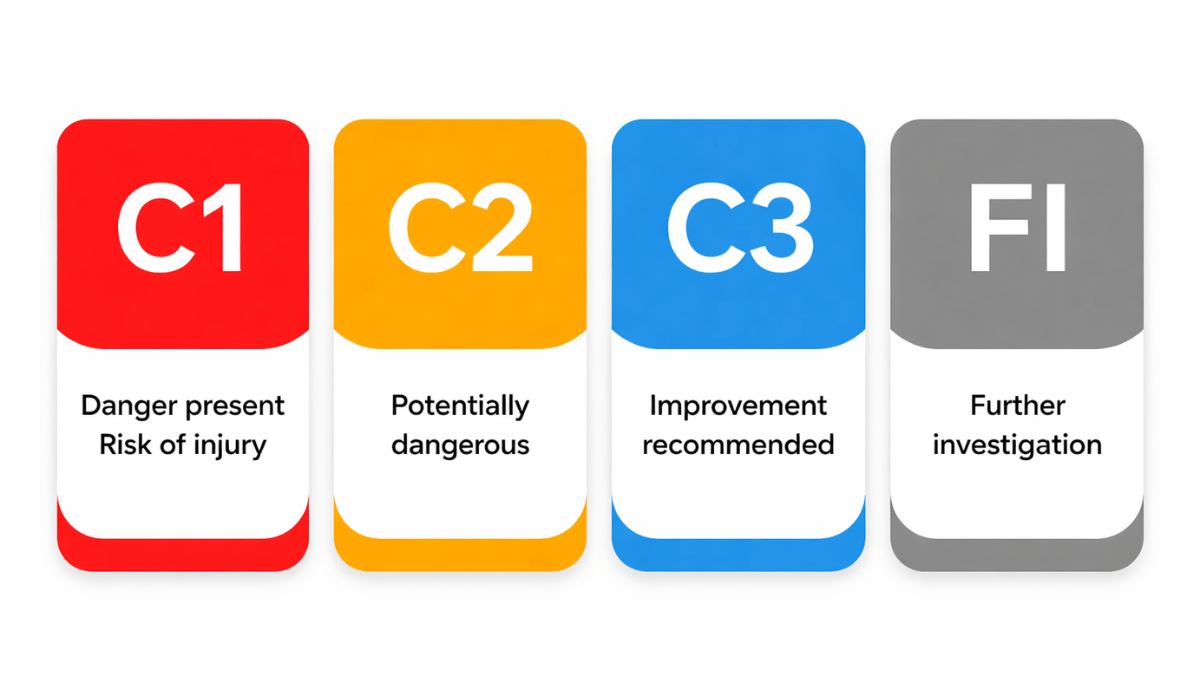
The outcome is satisfactory or unsatisfactory, and any defects are coded. C1 means danger is present and somebody is at risk. C2 means potentially dangerous. C3 is an improvement recommendation and does not make a report unsatisfactory. FI means further investigation is needed.
That coding is the whole point of the document, and it is why an EICR cannot stand in for an EIC. It tells you the condition of what is there. It does not tell you that any particular piece of work met the standard when it was done.
Why landlords get asked for two different things
This is where most of the confusion lands.
The Electrical Safety Standards in the Private Rented Sector Regulations require an EICR at least every five years, and that is the document you give the tenant and the council. But if you then have remedial work done, or a board replaced, the electrician will issue an EIC or a Minor Works Certificate for that work, and the council may want to see it alongside the report as evidence the remedials were completed.
So a compliant landlord file often has a report and a couple of certificates in it, doing different jobs. One says the installation is in satisfactory condition. The others say the work carried out to get it there was done properly.
What to check before you file it
Whichever document you end up with, a few things are worth a glance.
Check the address is right and complete, because an incomplete address is the most common reason a certificate gets rejected later. Check it is signed and dated. Check the scheme membership number is on there, whether that is NAPIT or another scheme. And on an EICR, check there is a next inspection date on it, since that is the date everything else runs from.
If there is no schedule of test results attached to an EIC, go back and ask for it. The certificate without the readings is half a document.
The other certificate nobody expects
On certain jobs in a home you will also get a building regulations compliance certificate, which arrives separately and often weeks later.
That is a different thing again. Some electrical work in a dwelling is notifiable under Part P of the building regulations, and a scheme registered electrician can self certify it and notify building control on your behalf. The certificate that drops through the door afterwards is the notification, not the electrical certificate.
New circuits and consumer unit replacements are the common notifiable jobs. Adding a socket to an existing circuit in a kitchen or a bathroom used to be notifiable too, and the rules on that have narrowed over the years, so the practical answer is to ask before the work starts whether it is being notified.
Keep it with the EIC. A buyer’s solicitor will usually want both.
Common questions
Is an EICR a certificate?
Not strictly. It is a report, which is why it is called a condition report rather than a certificate. People call it an electrical safety certificate in everyday use and everyone knows what is meant, but if a solicitor or a council is being precise about wording, that is the distinction.
How long is an Electrical Installation Certificate valid for?
It does not expire. It certifies that a specific piece of work met the standard on the day it was done, so it stays valid as a record of that work forever. What has a date attached is the EICR, which recommends when the installation should next be inspected.
Do I get a certificate for a repair?
Not usually. Swapping a broken socket for an identical one is maintenance rather than an alteration, so there is nothing to certify. If the repair ends up changing the circuit, it becomes minor works and you should get the certificate.
Who is allowed to issue these?
Anyone competent to carry out and verify the work, which in practice means a registered electrician working to BS 7671. For notifiable work in a dwelling, a scheme registered electrician can self certify and notify building control, which is what the compliance certificate that arrives afterwards relates to.
I have lost my certificate, can I get another?
Ask the electrician who did the work, since schemes require records to be kept. If the firm has gone or nobody knows who did it, there is no way to reissue a certificate for past work. The usual answer then is an EICR, which assesses what is actually there now.
If you are not sure which document your job needs, or you have been handed one and asked for another, our electrical inspection and testing Liverpool page covers what an inspection involves and what you get at the end of it. Board replacements and the certificates that come with them are on the fuseboard upgrades Liverpool page. We are NAPIT approved electricians Liverpool landlords, agents and homeowners use when the paperwork has to be right as well as the work.
What this guide is based on
The standards, rules and job records behind the figures above.
- BS 7671:2018+A2:2022. The wiring regulations every inspection is coded against, so C1, C2 and C3 mean the same thing whoever carries out the test.
- The Electrical Safety Standards in the Private Rented Sector (England) Regulations 2020. The five year inspection duty and the 28 day rule for giving tenants a copy of the report.
- The Renters’ Rights Act 2025. Lifted the maximum civil penalty for breaching those standards from £30,000 to £40,000 per breach from November 2025.
- NAPIT scheme rules. What an approved contractor has to hold, record and report, including the certification we issue after every job.
- Our own job records across Liverpool and Merseyside. The figures above come from work we have actually priced and carried out, not from a national average.
Checked on 18 November 2026 by Dave Harvey, NAPIT approved contractor, member 66463. Rules change, so if you are reading this a long way after that date, give us a ring and we will tell you where it stands.
Related reading
How Often Does a Commercial Property Need Fixed Wire Testing?
Five years for an office or a shop, three for industrial premises, and annually for anything higher risk. Those are the intervals…
Landlords
How Much Does an EICR Cost? A 2026 Guide for Landlords
Ask three electricians what an EICR costs and you will get three different answers. That is not because anyone is being cagey,…
Landlords
Who Is Responsible for the EICR in a Block of Flats?
If you let a flat, there are two separate electrical installations in play and they usually belong to two different people. Miss…
The work behind it
Electrical Inspection & Testing
Full Electrical Installation Condition Reports for landlords, homeowners and businesses, with the certificate issued within 24 hours and remedials priced up front.
Fuseboard Upgrades
Swapping out old rewireable fuses and tired boards for a modern RCBO unit, tested, certified and notified under Part P within 36 hours.
Landlord Electricians
EICRs, fire alarm testing and emergency lighting for rented property across Liverpool, booked around your tenants and certified the same week.