


When the lights go out unexpectedly, panic can set in fast. People stumble. Exit routes disappear into darkness. What should be a simple evacuation becomes dangerous. Emergency lighting exists to prevent this exact scenario, but these systems only work when they’re properly maintained and tested.
If you own or manage a building in the UK, knowing how these systems function—and why regular electrical light testing matters—could mean the difference between a safe evacuation and a serious incident.
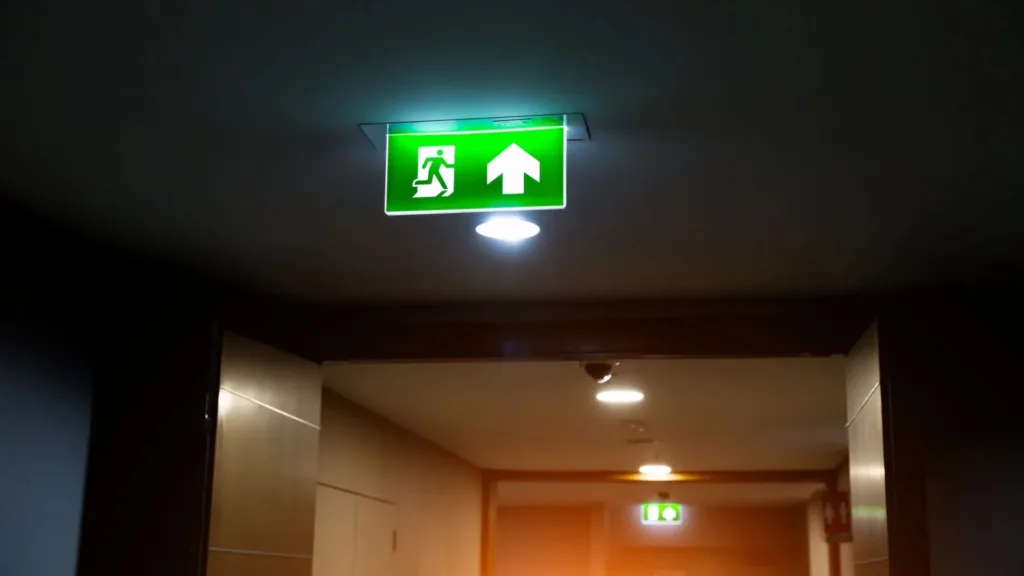
How Emergency Lighting Actually Works
Emergency lighting operates on a simple principle. These systems stay connected to your building’s mains electricity supply under normal conditions. The moment that supply fails, backup batteries kick in immediately. There’s no delay. No waiting for generators to spin up. The transition happens in fractions of a second.
Most systems you’ll encounter fall into one of two categories. Maintained systems stay lit all the time, running off mains power during normal operation and switching seamlessly to battery backup during outages. You’ll spot these in cinemas, theatres, pubs, and anywhere that lacks natural daylight. The lights remain visible constantly, so occupants always know where the exits are located.
Non-maintained systems take a different approach. These stay dark under normal conditions. They’re completely invisible until the moment mains power drops out. Then they spring to life instantly. Offices, warehouses, factories, and schools typically use this type. Since normal lighting already illuminates these spaces during occupied hours, having emergency lights burning continuously would serve little purpose.
Both types rely on rechargeable batteries housed within each fitting or connected to a central battery system. These batteries receive constant trickle charging from the mains supply, keeping them ready for the moment they’re needed. Most installations provide three hours of illumination—long enough for buildings to be evacuated and made safe.
Where Emergency Lighting Gets Installed
Placement follows strict guidelines laid out in British Standard BS 5266-1. The standard exists because emergency lighting serves several distinct purposes. It illuminates escape routes so people can find their way out. It highlights exit doors and safety signage. It draws attention to firefighting equipment and manual call points. It prevents panic in open areas where sudden darkness could cause stampedes or crushing injuries.
Specific locations require coverage without exception. Every exit door intended for emergency use needs illumination. Stairways must receive direct light on every flight. Any change in floor level gets a fitting nearby. Corridor intersections need coverage so people can see which direction leads to safety. External areas immediately outside final exits require lighting too—evacuation doesn’t end at the door.
Windowless rooms and basements pose particular challenges. These spaces have zero borrowed light from outside. Even during daylight hours, a power cut plunges them into total darkness. Toilets larger than eight square metres also fall under the requirements. So do lift cars, motor generator rooms, plant rooms, and control centres.
High-risk task areas demand additional consideration. Anywhere dangerous equipment operates needs lighting intense enough for workers to make things safe before leaving. Think machinery with moving parts, chemicals that require proper shutdown procedures, or processes that can’t simply be abandoned mid-task.
The Legal Framework Surrounding Emergency Lighting
The Regulatory Reform (Fire Safety) Order 2005 establishes the legal basis for emergency lighting requirements across England and Wales. Scotland and Northern Ireland have equivalent legislation achieving the same outcomes. These regulations apply broadly—covering private businesses, public sector organisations, charities, and trusts without distinction.
Under this framework, every covered premises must have a “Responsible Person” who carries legal accountability for fire safety measures. This person must ensure emergency routes and exits display proper signage. They must provide emergency lighting of adequate intensity wherever illumination is needed. They must implement suitable maintenance systems to keep everything working properly.
Building Regulations 2010, specifically Approved Document B covering fire safety, reinforces these requirements. The document mandates escape lighting in nearly all buildings except private residential properties. It explicitly references BS 5266-1 as the standard to follow and BS 5499-4 for exit sign design and placement.
Failing to meet these obligations carries serious consequences. Enforcement notices can require immediate corrective action. Prohibition notices can shut down premises entirely until issues get resolved. Fines reach substantial amounts—unlimited in some cases for organisations. Criminal prosecution remains possible where negligence leads to harm or death.
Why Regular Testing Cannot Be Skipped
Emergency lighting sits dormant most of the time. Months or even years might pass between power failures in well-maintained buildings. During this time, batteries age. Connections corrode. Lamps degrade. Circuit boards develop faults. Without regular testing, you’d never know something had failed until the moment you needed it most—which is precisely the worst time to discover a problem.
BS 5266-1 specifies testing requirements clearly. Monthly functional tests must verify that each fitting activates correctly when power is interrupted. These brief tests confirm the changeover mechanism works and the lamp illuminates. They don’t need to last long—just enough to spot obvious failures.
Annual tests go much deeper. These full-duration assessments run emergency lighting systems for their complete rated period, typically three hours. This verifies that batteries can actually sustain illumination for the necessary time. Weak batteries might light up fine for a few minutes but fail well before reaching the three-hour mark. Only full-duration testing reveals this hidden vulnerability.
Visual inspections complement electrical testing. Physical damage to fittings, obscured signage, changed room layouts affecting coverage—these issues require human eyes to spot. Someone needs to walk the building, checking each installation point against current conditions.
Documentation matters too. Every test requires recording in a logbook. Dates, results, failures identified, repairs completed—all of it goes on record. This documentation proves compliance during inspections and provides evidence if incidents occur. Verbal assurances that “we test regularly” hold no weight without written records backing them up.
The Consequences of Neglecting Your System
Insurance companies pay close attention to fire safety compliance. Policies frequently contain clauses requiring adherence to relevant regulations and standards. A fire claim following an incident where faulty emergency lighting contributed to injuries could face rejection if testing records show gaps or deficiencies. The financial exposure from an uninsured incident dwarfs any savings from skipping maintenance.
Beyond financial concerns, moral responsibilities weigh heavily. Building occupants trust that safety systems will protect them during emergencies. Employees, customers, visitors, residents—all assume the green exit signs will actually lead them to safety when needed. Betraying that trust through negligence feels different from simple regulatory non-compliance.
Fire risk assessments must consider emergency lighting as part of the broader safety picture. Assessors examine whether systems cover all necessary areas, whether testing happens at required intervals, and whether records demonstrate ongoing compliance. Deficiencies here affect the overall risk rating of the premises and may require immediate remedial action.
Properties That Need Emergency Lighting Testing
Nearly every non-domestic building falls under emergency lighting requirements. Commercial offices need coverage throughout. Retail premises require illumination of both customer and staff areas. Factories and warehouses must protect workers who may be unfamiliar with escape routes or working with hazardous equipment.
Schools, colleges, and universities require particular attention. Large numbers of people—many of them young—occupy these buildings. Complex layouts with multiple floors, wings, and staircases demand thorough coverage. Assembly halls and gymnasiums present open-area lighting challenges distinct from corridor requirements.
Healthcare settings face additional complexity. Patients may have mobility limitations affecting evacuation times. Staff need illumination to continue critical care during outages or to safely cease treatments before evacuating. Hospital buildings often operate 24 hours daily, meaning occupancy never drops to zero.
Hotels and hospitality venues present their own challenges. Guests arrive unfamiliar with the building layout. They may be sleeping when emergencies occur. Language barriers might limit their ability to follow verbal instructions. Clear, visible escape routes become even more important in these circumstances.
Houses in Multiple Occupation—HMOs—carry specific regulatory requirements. Multiple households sharing a building means varied occupancy patterns and potential communication difficulties between residents. Common areas like hallways, staircases, and shared kitchens require emergency lighting coverage with regular testing documented by the landlord or managing agent.
Residential care homes fall under particularly strict scrutiny. Elderly or vulnerable residents may need assistance evacuating. Staff ratios during night hours drop significantly. Power failures at 3 AM present very different challenges than those occurring during busy daytime periods.
The Responsible Person and Their Duties
Identifying the Responsible Person for any given premises follows logical principles. In most workplaces, this means the employer. In buildings with multiple occupiers, the person controlling common areas—typically the landlord or management company—takes responsibility for those shared spaces. Individual tenants remain responsible for their own demised areas.
These duties cannot simply be delegated away through contracts or agreements. The Responsible Person may engage competent contractors to perform testing and maintenance. They may appoint staff members to conduct monthly checks. But ultimate legal accountability remains with them regardless of who physically performs the work.
Competence matters when selecting contractors or assigning duties internally. Testing emergency lighting requires knowledge of the relevant standards, experience identifying faults and deficiencies, and ability to recommend appropriate remedial actions. Ticking boxes on a form without genuine assessment achieves nothing useful.
Record-keeping forms part of the Responsible Person’s duties. They must maintain logbooks documenting all tests, inspections, and repairs. These records need preservation for reasonable periods—typically the lifetime of the installation. Losing documentation through carelessness or poor filing creates the same problems as never testing at all.
How Emergency Lighting Connects to Overall Fire Safety
Emergency lighting doesn’t exist in isolation. It forms part of an interconnected fire safety strategy alongside detection systems, alarm systems, firefighting equipment, and physical escape routes. Each element supports the others. Failures in one area place additional strain on everything else.
Fire alarm activation often triggers emergency lighting in well-designed systems. Even before mains power fails, the alarm signal can switch emergency fittings to battery operation. This provides immediate visual cues reinforcing the audible alarm—particularly valuable in noisy environments where sirens might not be immediately obvious.
Exit signage works in tandem with route illumination. Signs show where to go. Emergency lights make the path visible. Remove either element and the other becomes less effective. A perfectly illuminated corridor leading to an unmarked door serves occupants poorly. Similarly, clear signage pointing into darkness offers limited practical help.
Fire risk assessments consider emergency lighting alongside other protective measures. Assessors examine whether the combination of measures adequately protects occupants given the building’s specific characteristics. A complex building with many potential routes might need more extensive emergency lighting than a simple single-storey structure with obvious exits.
Training programmes should address emergency lighting too. Occupants need awareness of what the systems look like under normal conditions so they recognise them during emergencies. Staff conducting tests need proper instruction on procedures and documentation requirements. Fire wardens require knowledge of emergency lighting coverage to assist evacuations effectively.
Getting Your Emergency Lighting Tested Properly
Testing emergency lighting properly requires more than flipping switches and watching lights come on. Genuine compliance demands systematic assessment of every fitting against documented records. It requires knowledge of what constitutes acceptable performance and what indicates developing problems.
Our NAPIT-approved electricians deliver professional testing services for commercial properties, HMOs, and other regulated buildings throughout the North West. We handle both the 6-monthly and annual testing requirements, providing the documentation you need to demonstrate compliance during inspections.
If you manage properties requiring fire and emergency light testing, or you’re unsure whether your current arrangements meet regulatory standards, get in touch with our team. Call us or drop an email to [email protected]. We’re happy to discuss your specific requirements and explain how we can help keep your building safe and compliant.
For clients across Liverpool and the wider region, our electricians in Liverpool offer the same professional service and attention to detail that’s built our reputation over many years serving the North West.